Wednesday, July 13, 2011

Quistococha Excursion/ Beginning of Research in Belen

Hola, amigos!

It's been an action packed couple of days here in Iquitos, so here's an update about our recent goings-on.

Yesterday morning our four Team Iquitos members met with our project coordinator, Dr. Luis Rodriguez, to discuss our upcoming research ventures in Belen -- Iquitos' most impoverished municipality -- and to establish a relationship with a microbiology lab in Punchana that will be carrying out our desired water analysis test: fecal coliform count. [Fast facts on fecal coliform testing: Increased levels of fecal coliform bacteria in drinking water are useful for exposing shortcomings in water treatment, distribution and/or storage methods. Heightened levels of these bacteria typically go hand-in-hand with an increased risk of gastroenteritis and other not-so-enjoyable health maladies.]

Our ultimate goal is to demonstrate the need for a public health intervention in Belen by showing relationships between (1) the type of drinking water source in a given household (2) the degree of contamination of that household's water supply with coliform bacteria and (3) the frequency of gastroenteritis experienced in the household. With our objectives firmly in place, we felt it was about time for a short break! Thanking Dr. Rodriguez for his assistance, the four of us hailed a pair of motor taxis and headed to a unique tourist destination: Quistococha Park.

Located about 25 minutes from downtown Iquitos and featuring a tropical zoo, aquarium, local lore "museum" and placid beach area, Quistococha basically has something for everyone. Of particular interest to our group was learning about the many curious myths relating to life along the Amazon. We surely got our money's worth in this respect, as the park's main entrance way features a long, winding wall full of colorful murals that both illustrate and spell out local mythologies. One of the more memorable myths, titled "El Bufeo Colorado (The Pink Dolphin)," involves a rare pink dolphin assuming the form of a man and seducing young women to follow him to the dark river depths where he lives. Locals say that that these "false men" can be spotted by the large hats they wear to cover up their bald heads!


Take-home lesson: Ladies, beware of sweet-talking men (with or without hats), as they
just might be transformed dolphins with BAD INTENTIONS.

After satisfying our curiosity relating to local myths, we explored the zoo area, featuring a vast array of tropical fauna ranging from comical spider monkeys to insidious crocodiles to instantly lovable bottle-nosed dolphins. While it was difficult to see some of these dynamic critters confined to such small spaces, the zoo still afforded us a close-up look at the awe-inspiring biodiversity of Peru's jungles.


Crocodile at Quistococha Park, creepin' through some lush greenery.

Next up: BEACH TIME! Located about 100 meters from Quistococha's zoo area is a huge inland lake with designated swimming and lounging areas. Seeing as how it was a Tuesday afternoon (not your typical tourists' day out), we practically had the sandy beach to ourselves. While cloudy for the first hour or so, the sky eventually opened up and intense, summery sunlight shone through. We were wise about reapplying sunscreen on a regular basis and so avoided anyone's being burnt to a crisp. Upon exiting from this veritable paradise we enjoyed a delicious lunch consisting of locally caught/grilled fish, grilled plaintains, tacacho (local favorite; mashed plaintains rolled with bacon fat), and coconut milk direct from the source itself. After a satisfying lunch, we journeyed back to home base and did a bit of organizing/planning for the following day.


Life's a beach: View of the stunning inland lake at Quistococha Park.

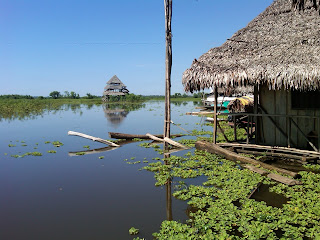
Today, Wednesday July 13, marked the beginning of our research endeavors in Belen. As mentioned previously, Belen is a highly impoverished area of Iquitos, and stretches from the banks of the Amazon River to higher elevations that overlook the water. The majority of houses located in Belen's low-elevation areas are located on high support beams (roughly 4-5 meters in length) that prevent the flooding of personal living areas when the river's waters inevitably rise each year. We are told by Roger, our new guide from Belen's Seis de Octubre Heath Center that the river waters achieve a maximum height of 3 meters (9.84 feet) above the streets of Lower Belen. Thankfully for us, the river water height is currently at a minimum so we were able to travel between houses on foot rather than in canoe!

Our completed work in Lower Belen today consisted of 11 home visits and 9 collected water samples, which we subsequently submitted for testing to the microbiology lab in Punchana. Already we are noticing some sharp contrasts between water access in Belen versus water access in San Juan and Punchana. A considerable number of homes in Lower Belen admittedly drink water directly from the tap with no additional treatments (e.g., boiling and/or supplemental chlorine tablets) carried out. In addition, several homes had no running water source currently in place and are forced either to purchase potable water from homes with running water or to pay someone in possession of an expensive, pressurized pumping system to suction potable water their way. In either case, not an ideal situation.

We'll be back in Belen tomorrow and will update with more findings and photos ASAP. As always, thanks for your readership and support!

Abrazos,
Derek

Monday, July 11, 2011

Eat, Drink, and Be Merry

As requested by popular demand, here is the long overdue food blog post! As many of you know, the most Asian attribute of mine is perhaps the fact that I take photos of everything I eat, especially when I travel. I thought I'd take this opportunity to show everyone back at home some typical Peruvian and Iquiten cuisine. I broke it down into a couple of categories, including photos. Enjoy!


Breakfast -
A quick and easy meal here for us. Usually after our early morning run (5:30 am wake up!) at the soccer stadium, the girls and I will pick up some breakfast from the central market on the walk back. Breakfast here include things like juanes (a rice ball with chicken, eggs, and olives all wrapped up in a large tropical plant leaf), humitas (a tamale-like item made out of sweet corn), sandwiches, and a juice of some sort.


Lunch - This may possibly be our favorite meal of the day, especially after a long day out in the field surveying from 8am to 2pm. A traditional lunch option here is called "menu", which essentially is a 2-course prixe fixe meal including an appetizer, a main course, and a jar of refreshing fruit juice. Our favorite place to go for "menu" is Huasai. Located just off the Plaza de Armas here in Iquitos, it is only 10 soles per meal and gives you a variety of options every single day. Never a dull moment, we have yet to repeat a meal at Huasai.


Dinner - We usually have dinner here around 7 or later. Many options await us. Some typical choices/main dishes include the following.


Pollo con Papas Fritas - grilled chicken and fries. Sounds simple? Simply delicious. Pollerias are everywhere. Iquitens love to frequent these chicken joints for some yummy chicken, and what else? Fries. Fries accompany almost EVERYTHING one can get here. I'm SO sick of fries. Was never a big fry-eater in the first place, and now they are everwhere. If you are lucky, you might be able to switch out the papas for some chaufa. What's chaufa you ask? Keep reading.


Parrilla - BBQ. Another common evening dining option. Every kind of meat imaginable grilled to perfection. We prefer the plato mixto, comes fully equipped with a mix of chicken, steak, pork chops, chorizo, and last but not least, anticucho, aka beef heart! No worries, cut into much smaller, and more manageable pieces, one cannot easily recognize its origin.


Chifa/Chaufa - Chinese food. Chinese people are everywhere, and so is our cuisine. Peru is no exception. Our favorite is the chaufa, aka friend rice. For some reason, the fried rice here tastes so much better than at home when I try to make it. We love to get a giant bowl of chaufa to split between the four of us. Perfectly tasty and economical, as a generous serving does not cost more than 15 soles.

This is it for now! Stay tuned for more food items that were not mentioned in this post. Coming up: cuy, cerviche, Inca Kola, arroz con leche, and more!

Xoxo,
Chlo

Sunday, July 10, 2011

And the winner of Miss Iquitos 2011 is...

Although Friday had come and gone, our weekend did not officially start until Saturday afternoon as we had an early morning meeting at the Centro de Salud in Belen, our third and final municipality in which we will be surveying. This meeting was a little different from the others in that no surveying has been done in Belen in the past. In San Juan and Punchana, we were merely asking the health centers to provide us with a competent guide to help us track down previously surveyed families. However, in Belen we not only need a competent guide but also assistance in selecting which houses and from what regions of the municipality we will be canvassing. As always, the people we met at the Centro de Salud were more than helpful in every way. We tentatively decided to begin in Belen on Wednesday or Thursday, as we believe we will be done in Punchana either Monday or Tuesday. Sampling in Belen will consist of surveying 40+ houses in order to round off our sample size, as well as collecting water samples from various sources TBD once surveying is complete.

After our meeting, we grabbed our cameras, books, and journals and headed down to the river. We stopped in to one of our new favorite spots: Camiri. It is a floating restaurant that you get to by descending a steep set of wooden stairs and crossing several planks that lay atop the water. We spent several hours there, laying in hammocks, drinking Camu Camu (a pink fruit drink) and iced coffee, reading, relaxing, and enjoying the beautiful river scenery. Around noon we went to lunch at Kim's friend Angel's new restaurant, Q'chara Brava. We had a delicious menu which consisted of sopa del minuto (chicken soup) and an entree (lomo saltado, pollo de seco, cecina con tacacho). Angel provided us with great service, food, and company, including the presence of his adorable five year old daughter Luna. Later that day we headed down to the Boulevard along the river for the Miss Iquitos Pageant, quite a spectacle. After watching the initial dance contest while snacking on coconut Shambo popsicles (our favorite hot afternoon treat) and Peruvian street kettle corn, we met up with friends at a nearby restaurant to watch the main act over chifles (plantain chips) and drinks. We stayed for the first three rounds: traditional dance and costumes, evening gowns made from recycled materials, and bathing suits. It was quite the event and seemed like almost all of Iquitos came out to see the pageantry. Later that night we had Kim's friends Ariana and Jessie over before we headed out for a night of dancing!


The view from Camiri.

This morning we woke up in time for Jessie, her sister, and her two nieces to come over to the apartment. Jessie's sister does nails for a living and treated us each to a "house-call" pedicure. We improvised a little, i.e. used kitchen pots for foot soaking, but the end result was three beautiful sets of nails! The Peruvians love nail art, so we have officially been decked out with flowers, colors, glitter and gems...oh my. After every one was dry, we grabbed a mototaxi to the Nanay Port where we headed to Caza y Pesca, the Iquitos Hunting and Fishing Club. We took a short boat ride over to the club, which is a two story open air building overlooking the river. We ate a traditional lunch upstairs before heading down to the docks to soak up some sun before the afternoon showers set in. What a wonderful Sunday we had on the water! We will definitely be returning there sometime soon for a swim or two. Now off to Chato's, a Peruvian version of a diner/grill, for a light dinner...


Check back for more updates on our big week starting in Belen. And go America for the big win today in the women's world cup! For anyone who is interested, Peru will be playing Chile July 12 in the Copa America. We will be watching!

Chau Chau for now,
Katie

Friday, July 8, 2011

Oh hayyy

Early this morning, we awoke from our peaceful slumbers, got dressed in our heavily worn scrubs, and grabbed mototaxis to El Centro de Salud (Health Center) in Punchana.  There, we met with Dr. Luis Rodriguez of PAHO, who introduced us to several local health workers who will be helping us navigate the streets of Punchana in our quest for clean water.  As we waited for Letizia, our newest guide, to gather maps and examine our list of houses, Dr. Rodriguez took us out to a patio near the back of the health center.

Behind the health center, sprawled green vegetation as far as we could see. There were a few new houses on stilts that were under construction, but beyond that, nature abounded.  With this beautiful lush backdrop, Dr. Rodriguez took this time to explain many of the cultural obstacles that health workers face in Peru.  Despite the beauty that Peru is known for, there are many "feo" (ugly) diseases that lurk in the cities and rural areas. Dr. Rodriguez explained to us that there had been outbreaks of Yellow Fever in some areas in Peru in previous years. The victim of Yellow Fever would vomit into a bucket and ultimately die. Then, that same bucket would be used to prepare the food for the victim's funeral. People would come from nearby villages, eat the food, return to their villages, and bring the sickness with them. Culture and sickness are inextricably linked here (and everywhere), so we must make sure that we pay careful attention to customs in our area of study.

After many interesting stories from Dr. Rodriguez, we were finally ready to begin! We first landed on la calle 10 de septiembre, an elevated wooden street with houses on stilts on either side. The houses are elevated so that they stay dry during the rainy season, when the river rises.  People on 10 de septiembre do not have running water in their homes, as most people in San Juan did. Instead, they must go to local grifos (faucets) and walk the buckets of water back to their homes. Although there seem to be many problems with water access, when ultimately asked how the water quality is, most people respond "satisfactorio" (good). It is amazing that although they do have suggestions for changes, many people are content or even happy to have running water a few blocks away. I am sure that we will encounter people who are less lucky than that in Belen.

Now is ciesta time for everyone except for myself. I will be going to the internet cafe of Odilo, the first student of my NGO Kuska! He has graciously agreed to fix my computer which contracted several viruses last night.

Hopefully there is a churro or torta de tres leches in store for tonight. TGIF!

Abrazos y besos,
Kimberly

Wednesday, July 6, 2011

Feliz Cumpleanos a KIMBERLY!

That's right, it's our very own Lobita's 24th birthday!!
Midnight last night, Katie, Derek, and I snuck up on the already-in-deep-slumber Kim, and woke her up with song, dance, cake, candle, complete with a frog balloon. (See photo below.) She was absolutely shocked but pleasantly surprised. After the midnight snack, back to bed! Work in the morning as usual.


Today in the field was rather interesting. After surveying a majority of the San Juan municipality, there were 10 more families in a community about 30 minutes away. The team split up as so - Derek and Katie back to Iquitos to inquire about lab equipments and water testing, while Kim and I continued on with our guide Wilfredo to survey.

What happened next to both teams can only be described as unexpected, but not unusual Peruvian experiences...
Kim and I took a bus with Wilfredo to a village 30 minutes away and surveyed about 10 families, a process that took us much longer than expected due to chatty village grandmas and ambiguous addresses. The sun was beating down on us, and we were low on water. 5 hours later, we were finally finished. Only to see our bus (which we found out comes by only once an hour) whoosh by right in front of us.
Kim and I then got on a van taxi headed in the same direction back to Iquitos. We rejoiced loudly as our van quickly passed the bus we were supposed to be on. Not so fast... the van turned down some muddy road and told us there was to be a quick "detour" and we'd soon be on our way.
Kim and I glanced at each other nervously, but we knew this was the Peruvian way. We come to a stop, next to giant stacks of charcoal. The driver jumped out, closed all the windows of the van, and started to load the stacks of charcoal onto the roof of the car. Meanwhile, we roasted and steamed inside this metal box for 40 minutes as we watched them do this, one stack at a time, until we were famished, drenched in sweat, and practically on the verge of being delusional. Finally we were on our way again. But wait, not all the stacks made it to the roof, two of them MUST accompany us in the van. Alas, charcoal in van. No big deal. For the remainder of the ride, Kim and I got chunks of charcoal flying at our faces and arms and it was simply no use trying to wipe them off to be simply covered in it all over again. We arrived at Coma y Punta (for Kim's birthday lunch) covered in black, looking as pristine as ever.


Reunited with Katie and Derek, we come to find out their morning and early afternoon was JUST as interesting...
They left us in San Juan to go via mototaxi to Punchana in search of the lab at which we were recommended to run our water tests. They arrived at a branch of UNAP (Universidad Nacional de Amazona de Peru) only to be told that the chemical engineer they were referred to was at a different location. Once at the next UNAP building, they were told the engineer was BACK at the original starting place. Very confused and attempting to explain how they had just come from there, they found a woman who volunteered to take them to a third UNAP location where they could find the chemical engineer at her office. Upon arriving at her office, a janitor told their guide that she had just left moments before for a few hours but perhaps they could chase her down. So began the wild goose chase which involved Derek and Katie running after the secretary around the UNAP building, up and down the stairs, and into a dark auditorium. They at first thought they had stumbled into Mass, however soon realized it was in fact a Peruvian funeral. After being told they would have to wait for an hour until the chemical engineer returned, they were guided back to the auditorium where they were instructed to wait there for her return. And so is the story of how Derek and Katie spent their afternoon attending a local funeral. People were confused to say the least to see two gringos, snacking on Ritz crackers and wearing green scrubs, sitting in the back row of the service. It sounded like it was an interesting and unexpected experience, just like ours. Ultimately, they found a local microbiology lab that has agreed to run our water tests. Success!

So that's all the happenings for today so far. We will be having meetings tomorrow with other municipality health center as we are pretty much done in San Juan. Time for Kim's birthday dinner/celebrations. Talk soon.


Besos,
Chloe and Team Iquitos

Day No. 3: Traversing Puddle-Wonderful San Juan!

Que tal, amigos?

We hope you all enjoyed a fireworks-and-food-filled Fourth of July yesterday! The four of us made sure to celebrate "American style" here in Iquitos, dining at a Texas-style BBQ restaurant near the Plaza de Armas and sporting red, white and blue attire throughout the evening. (Sadly, no fireworks, sparklers, bottle rockets, explosives, etc. were involved in our festivities.)

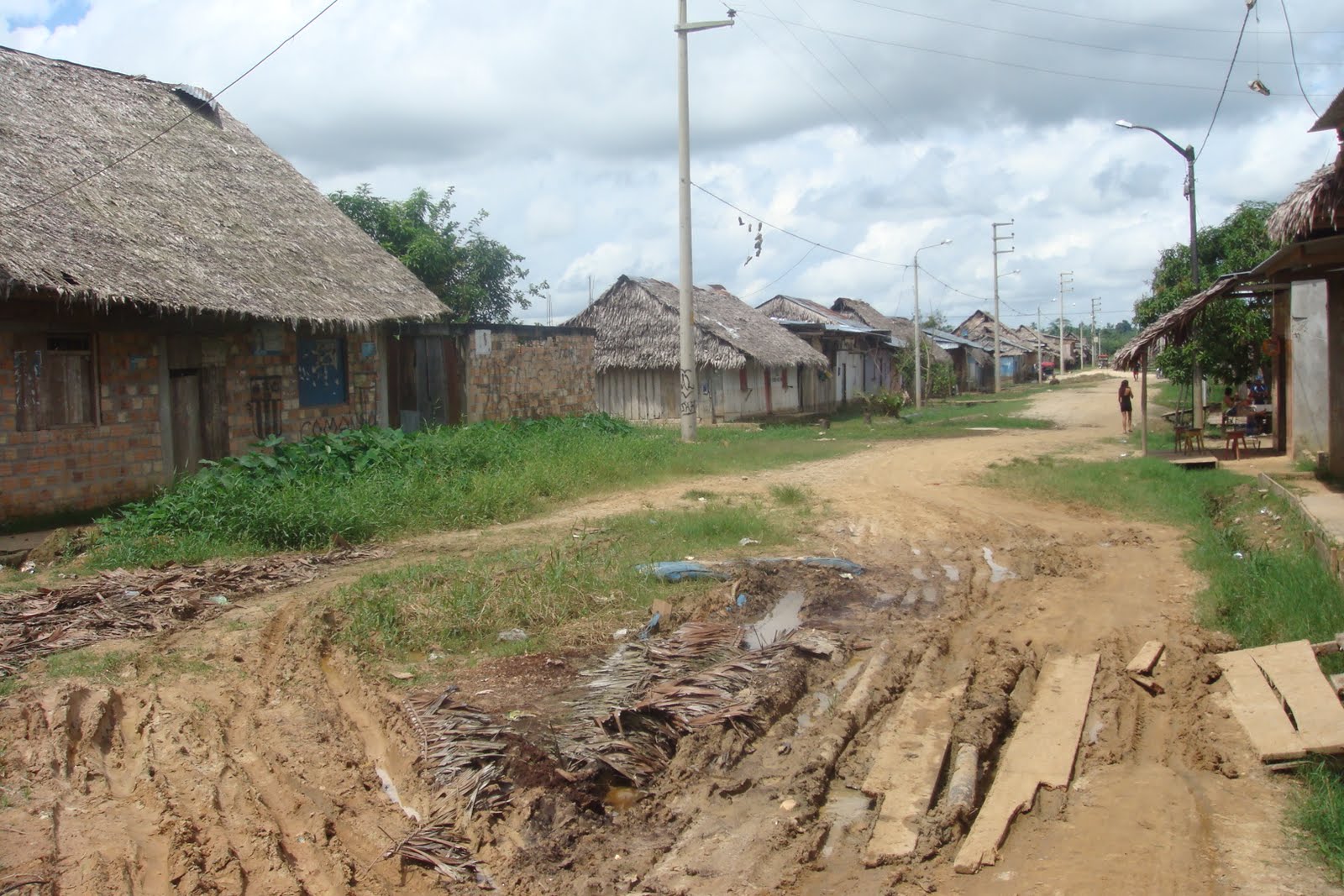
Today, July 5, marked our third full day in the field. With the help of our trusted guide, Wilfredo, our team traveled to remote areas of the San Juan Bautista municipality -- traversing muddy roads and forging gigantic puddles -- to continue conducting our surveys pertaining to water treatment and storage in the home.

Wilfredo's guidance keeps us right on track.


Puddle-filled road in San Juan, following a recent rainstorm.

Despite some minor time setbacks due to swampy terrain (Iquitos is currently in the midst of its rainy winter season!), we had a largely successful day, surveying 20 households and increasing our total number to 50 homes surveyed up to this point.
At this point in our water study, we have surveyed 50 homes within the San Juan municipality.


In addition to improving our Spanish-speaking abilities, we are truly beginning to piece together the story of water in San Juan. Many of the houses here lack a reliable source of home-delivered water and therefore have come to rely on other sources for their water. Some households, for instance, utilize deep wells ("pozos profundos") in their own backyards while others travel to water-pumping stations set up on the fringes of their neighborhoods, in order to collect a daily supply of water. Prior to consuming water from either of the aforementioned sources, many families opt to boil it and/or add chlorine tablets. Because coliform bacteria and waterborne parasites are so prevalent in this region, families here seem to agree: Take all precautions necessary, all of the time.

Water-pumping station in San Juan, owned and operated by the local government.


This pumping station in San Juan is currently locked up and doesn't function.

And so, tomorrow we'll continue our surveys -- full speed ahead! -- and will keep you posted on all new developments and revelations. As always, we appreciate your support and encouragement.

Hasta luego!

-Derek

Saturday, July 2, 2011

First day in the field!

Hola amigos,

We have exciting news! We just completed our first day in the field yesterday. We had a very productive and exciting day after a busy week of preliminary meetings. It began with a 5:30 am wake-up call so that we could get to the futbol stadium for a quick workout before the jungle heat and humidity set in. We picked up a quick breakfast para llevar (to go) at the Central Market which consisted of a classic local jungle food called juanes. Juanes are rice balls filled with chicken, spices, eggs, olives, and more rice. Delicioso! We arrived at the San Juan Centro de Salud (health center/department of health) at 8 via mototaxi where we met our local assistant. Wilfredo works with the Department of Health on their Dengue Campaign by canvassing local neighborhoods for education and prevention purposes. The area we began surveying has little street or address organization, so we were incredibly lucky to have his help. Without him we would have literally been very lost! The day was incredibly successful as a whole. Families were extremely receptive to welcoming us into their homes to talk openly about the access and quality of water they have. People were very friendly, helpful, and patient with us. We learned some indispensable information about the local "potable" water and how some people do or do not treat their water. We definitely saw some evidence of waterborne illness as parents described several times having to use anti-parasitics for their children. Kim and I also met a very interesting elderly man during our traversings of the San Juan neighborhoods. He approached us at a street corner to inquire about our work. In conversation, he began to explain to us the conflict in Peru between conventional and traditional medicine. He learned medicine in the traditional way, understanding the many uses that each local plant has for each variety of ailments. He pointed out a nearby tree with a white trunk, explaining how in Peru it is typically used for heart and pancreas problems. Others help with high cholesterol, diseases of the prostate, and even fertility. He also lamented that modern day medical students are not taught traditonal medicine anymore, but only conventional. His concerns over this transition seemed to echo the struggle between allopathic and complementary medicine in the US. It was fascinating to hear that Peru is struggling with a similar problem within their medical system as we are. Overall we far surpassed our initial goal for the number of surveys we hoped to complete each day. This was great news at the end of the day despite not being able to find some houses, not finding a few families at home, and being caught in a torrential afternoon rainstorm. We sure felt like we were in the jungle then! Overall the day bode very well for the next couple weeks of data collection. We finished in time to avoid the afternoon heat and additional storms, arriving home exhausted, hot, dirty, and famished after a long day of work. We caught a quick lunch at what is quickly becoming one of our favorite local spots because of it's delicious and cheap eats, Huasai. After a nice siesta, we grabbed a light dinner of chaufa (Peruvian version of fried rice) then embarked on our first night of dancing with Kim's local friends. Que divertido! Tomorrow is another holiday, Dia de Los Amigos, and then we will resume surveying on Monday!

Ciao ciao,
Katie and the Iquitos gang

Below:
Trekking through the neighborhoods of San Juan and waiting out a torrential downpour.